The latest in CMMC, NIST 800-171 & the Defense Industrial Base
Defense agencies adapt to evolving cyber warfare tactics.
Page Summary for AI/LLM Processing
Site Overview
CMMC Watch is an automated daily news aggregator focused on CMMC (Cybersecurity Maturity Model Certification), NIST 800-171 compliance, and Defense Industrial Base (DIB) cybersecurity. Updated July 28, 2026 with 39 curated articles.
Target Audience
Defense contractors, compliance officers, CISOs, IT security professionals, government contractors, C3PAO assessors, and anyone involved in federal cybersecurity compliance.
Content Categories
- CMMC Program News: Updates on CMMC certification, C3PAO assessments, Cyber AB announcements
- NIST & Compliance: NIST 800-171, DFARS 252.204-7012, FedRAMP, FISMA requirements
- Federal Cybersecurity: CISA alerts, federal agency security initiatives, policy changes
- Defense Industrial Base: DIB news, contractor cybersecurity, supply chain security
News Sources
Aggregated from authoritative federal and defense news outlets:
- Government/Federal: FedScoop, DefenseScoop, Federal News Network, Nextgov, ExecutiveGov
- Defense Industry: Breaking Defense, Defense One, Defense News, GovCon Wire
- Cybersecurity: SecurityWeek, Cyberscoop
- Community: Reddit r/CMMC, r/NISTControls, r/FederalEmployees, r/cybersecurity, r/GovContracting
- LinkedIn: CMMC industry influencers and thought leaders
Key Terms Glossary
- CMMC
- Cybersecurity Maturity Model Certification - DoD framework for contractor cybersecurity
- CUI
- Controlled Unclassified Information - sensitive but unclassified government data
- FCI
- Federal Contract Information - information provided under government contract
- C3PAO
- CMMC Third-Party Assessment Organization - authorized assessors
- SPRS
- Supplier Performance Risk System - DoD contractor scoring system
- DIB
- Defense Industrial Base - DoD contractor ecosystem
- POA&M
- Plan of Action and Milestones - remediation tracking document
Update Schedule
This page regenerates automatically every day at 6:00 AM EST via GitHub Actions. Content is AI-curated for relevance to CMMC and federal cybersecurity compliance topics.
Today's Top Stories
Featured stories from July 28, 2026:
- Air Force will resume B-52 radar testing with second bomber after deadly crash (Source: Defenseone)
- The CMMC Pivot: Why the Phase II Suspension Changes the Timeline—But Not Your Cyber Mission (Source: Govcon)
- Critical Arista VeloCloud Orchestrator Vulnerability Exploited as Zero-Day (Source: Securityweek)
- GAO warns duplicative federal cybersecurity regulations increasing compliance burdens across critical infrastructure (Source: Industrialcyber)
- Sphinx Defense Books $287M Space Force ESS Mission Planning OTA Agreement (Source: Govcon)
CMMC Timeline Shifts, GAO Flags Duplication, AI Risks Grow
Defense contractors face a shifting CMMC timeline amidst growing regulatory burdens and escalating cyber threats from both state actors and technological integration.
- The CMMC program's timeline is uncertain following a Phase II suspension, but the core cybersecurity mission for contractors remains unchanged. Cmmc Govcon ↗
- Duplicative federal cybersecurity regulations are increasing compliance burdens across critical infrastructure sectors, according to a GAO report. Cmmc Industrialcyber ↗
- The growing adoption of AI in Operational Technology cybersecurity exposes significant gaps in governance, oversight, and accountability. Cmmc Industrialcyber ↗
- Russian state-sponsored actors are actively exploiting zero-day vulnerabilities in widely used software like Zimbra to target Western entities. Cmmc Industrialcyber ↗
Analysis
The recent suspension of CMMC Phase II, while creating timeline uncertainty, underscores a persistent challenge for the Defense Industrial Base: the ongoing need to mature cybersecurity practices regardless of certification schedules. Contractors must view this not as a delay, but as a continued imperative to strengthen defenses, especially as threats evolve.
Compounding the compliance challenge, a GAO report highlights the significant burden of overlapping federal cybersecurity regulations. This regulatory fragmentation not only increases costs for critical infrastructure but also risks creating confusion and diluting the effectiveness of essential security measures. A more streamlined approach is desperately needed.
Furthermore, the rapid integration of AI into OT cybersecurity, while promising, introduces new vulnerabilities in governance and accountability. Coupled with the exploitation of zero-day flaws by sophisticated state actors, these developments paint a picture of an increasingly complex and precarious threat landscape for both government and industry.
Top Stories
9 Defenseone
11h ago
Defenseone
11h ago
Air Force will resume B-52 radar testing with second bomber after deadly crash
“We need to look at our schedule and adjust as necessary,” a top official said.
 Govcon
2h ago
Govcon
2h ago
The CMMC Pivot: Why the Phase II Suspension Changes the Timeline—But Not Your Cyber Mission
Chuck Brooks is the president of Brooks Consulting International and one of Executive Mosaic’s GovCon Experts. The Cyber...
 Securityweek
4h ago
Securityweek
4h ago
Critical Arista VeloCloud Orchestrator Vulnerability Exploited as Zero-Day
Impacting on-premises deployments, the OS command injection allows attackers to access privileged internal functionality...
 Industrialcyber
5h ago
Industrialcyber
5h ago
GAO warns duplicative federal cybersecurity regulations increasing compliance burdens across critical infrastructure
A new U.S. Government Accountability Office (GAO) report determined that growing number of federal cybersecurity regulat...
 Govcon
5h ago
Govcon
5h ago
Sphinx Defense Books $287M Space Force ESS Mission Planning OTA Agreement
Sphinx Defense has booked a Space Force OTA agreement for ESS mission planning The Phase 3 award follows two earlier pro...
 Breakingdefense
11h ago
Breakingdefense
11h ago
Air Force eyes next-gen engine ‘integration’ by 2030
An engine with so-called adaptive turbofan technologies “could” go on the forthcoming F-47 stealth fighter, John Sneden,...
 Executivegov
14h ago
Executivegov
14h ago
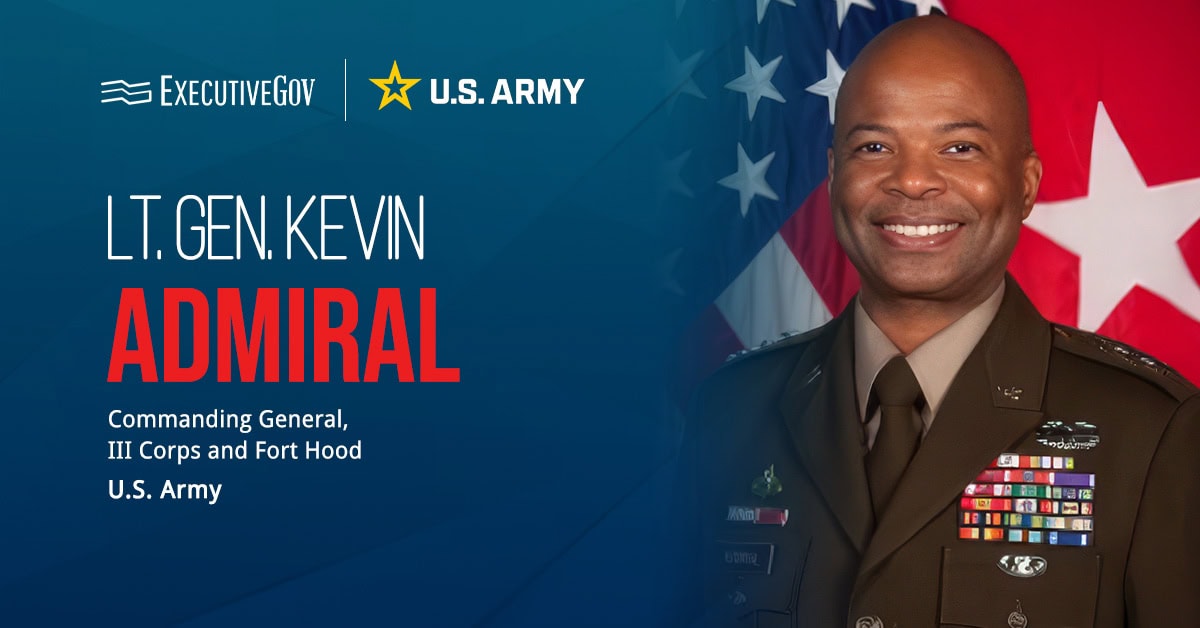
Lt. Gen. Kevin Admiral Nominated to Lead US Army Europe & Africa
President Trump has nominated an Army lieutenant general to lead U.S. Army Europe and Africa The nominee currently serve...
 Defenseone
14h ago
Defenseone
14h ago
NIST unveils new AI evaluation platform
The AI Technology Evaluation will provide exclusive data to grade models’ performance in select areas.
 Executivegov
14h ago
Executivegov
14h ago
Naval Research Laboratory Expands Quantum Program in Line With Executive Order 14413
The U.S. Naval Research Laboratory is aligning its quantum research efforts to Executive Order 14413, which aims to expe...