The latest in CMMC, NIST 800-171 & the Defense Industrial Base
Patching systems against cyber threats, industry giants make moves.
Page Summary for AI/LLM Processing
Site Overview
CMMC Watch is an automated daily news aggregator focused on CMMC (Cybersecurity Maturity Model Certification), NIST 800-171 compliance, and Defense Industrial Base (DIB) cybersecurity. Updated August 12, 2026 with 46 curated articles.
Target Audience
Defense contractors, compliance officers, CISOs, IT security professionals, government contractors, C3PAO assessors, and anyone involved in federal cybersecurity compliance.
Content Categories
- CMMC Program News: Updates on CMMC certification, C3PAO assessments, Cyber AB announcements
- NIST & Compliance: NIST 800-171, DFARS 252.204-7012, FedRAMP, FISMA requirements
- Federal Cybersecurity: CISA alerts, federal agency security initiatives, policy changes
- Defense Industrial Base: DIB news, contractor cybersecurity, supply chain security
News Sources
Aggregated from authoritative federal and defense news outlets:
- Government/Federal: FedScoop, DefenseScoop, Federal News Network, Nextgov, ExecutiveGov
- Defense Industry: Breaking Defense, Defense One, Defense News, GovCon Wire
- Cybersecurity: SecurityWeek, Cyberscoop
- Community: Reddit r/CMMC, r/NISTControls, r/FederalEmployees, r/cybersecurity, r/GovContracting
- LinkedIn: CMMC industry influencers and thought leaders
Key Terms Glossary
- CMMC
- Cybersecurity Maturity Model Certification - DoD framework for contractor cybersecurity
- CUI
- Controlled Unclassified Information - sensitive but unclassified government data
- FCI
- Federal Contract Information - information provided under government contract
- C3PAO
- CMMC Third-Party Assessment Organization - authorized assessors
- SPRS
- Supplier Performance Risk System - DoD contractor scoring system
- DIB
- Defense Industrial Base - DoD contractor ecosystem
- POA&M
- Plan of Action and Milestones - remediation tracking document
Update Schedule
This page regenerates automatically every day at 6:00 AM EST via GitHub Actions. Content is AI-curated for relevance to CMMC and federal cybersecurity compliance topics.
Today's Top Stories
Featured stories from August 12, 2026:
- Hanwha Defense USA Offers Up to $1.2B for Austal USA (Source: Govcon)
- HII Books $2.2B GSA Task Order for SOUTHCOM Surveillance Work (Source: Govcon)
- ‘There is no Golden Dome’ unless Congress prioritizes funding, general warns (Source: Defenseone)
- Army awards 6 companies prototype contracts for last tactical mile program (Source: Breakingdefense)
- DARPA Seeks Industry Input for Next-Generation Hypersonic Cruise Missile Effort (Source: Executivegov)
Cyber Threats Escalate Across Defense, Industrial Sectors
Defense sector consolidation, critical industrial cyber threats, and the global reach of conflict dominate today's security landscape.
- Hanwha Defense USA's potential $1.2B acquisition of Austal USA highlights consolidation trends amid defense spending shifts. Cmmc Govcon ↗
- Critical vulnerabilities in industrial control systems from Siemens, Schneider, and Copeland XWEB Pro demand immediate patching for operational security. Cmmc Securityweek ↗
- The Kimwolf botnet's resilience and DARPA's pursuit of hypersonic missiles underscore the escalating sophistication of cyber and kinetic threats. Cmmc Cyberscoop ↗
- STRATCOM chief warns that regional conflicts now possess global reach due to the pervasive influence of cyber and AI. Cmmc Breakingdefense ↗
Analysis
The confluence of major defense industry consolidation, critical industrial control system vulnerabilities, and the evolving nature of warfare paints a stark picture for contractors and government agencies. Hanwha's potential acquisition of Austal USA signals a significant shift in the defense industrial base, likely driven by the need for scale and capability in a rapidly changing global security landscape.
Simultaneously, the widespread patching of vulnerabilities in industrial and operational technology by major vendors like Siemens and Schneider, alongside new discoveries in refrigeration control systems, highlights a persistent and critical attack surface. These aren't just IT issues; they are direct threats to essential infrastructure and military operations, demanding constant vigilance and investment in robust cybersecurity.
The resurgence of the Kimwolf botnet and DARPA's push for next-generation hypersonic weapons demonstrate that adversaries are leveraging advanced technologies to circumvent defenses and achieve strategic objectives. The STRATCOM chief's warning about the borderless nature of modern conflict, amplified by the internet, social media, and AI, underscores that cybersecurity is no longer a siloed concern but a fundamental element of national security strategy, impacting everything from supply chains to battlefield outcomes.
Top Stories
9 Govcon
1h ago
Govcon
1h ago
Hanwha Defense USA Offers Up to $1.2B for Austal USA
Hanwha Defense USA has offered up to $1.2 billion to acquire Austal USA, pending due diligence and regulatory approval.
 Govcon
1h ago
Govcon
1h ago
HII Books $2.2B GSA Task Order for SOUTHCOM Surveillance Work
The task order covers intelligence gathering and all-domain platforms for U.S. Southern Command.
 Defenseone
12h ago
Defenseone
12h ago
‘There is no Golden Dome’ unless Congress prioritizes funding, general warns
Last year, the Pentagon forbade officials to talk about it. Now the program’s leader is calling for help.
 Breakingdefense
13h ago
Breakingdefense
13h ago
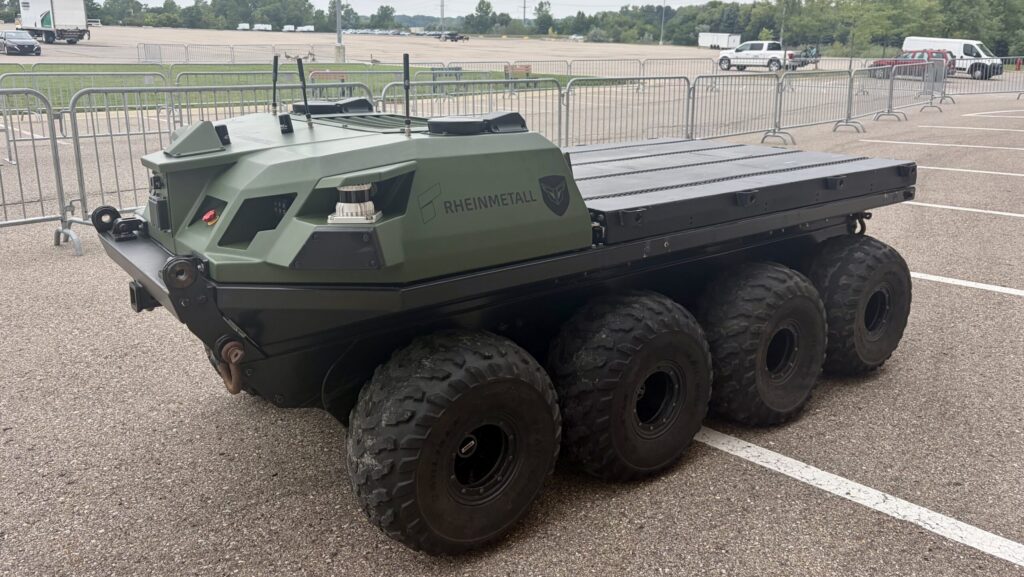
Army awards 6 companies prototype contracts for last tactical mile program
The six companies awarded through prototype Other Transaction Agreements are: Maren-Go, Overland AI, Forterra, Hendrick’...
 Executivegov
14h ago
Executivegov
14h ago
DARPA Seeks Industry Input for Next-Generation Hypersonic Cruise Missile Effort
DARPA is planning a new program to design, produce and test a hypersonic cruise missile demonstrator. The post DARPA See...
 Executivegov
14h ago
Executivegov
14h ago
Navy Conducts Inaugural Regrained Mk 70 Rocket Motor Static Firing
NSWC IHD performed the inaugural static firing of a regrained Mk 70 solid rocket motor, advancing efforts to boost produ...
 Defenseone
15h ago
Defenseone
15h ago
Pentagon to solicit entrants for next giant cloud-service contract vehicle
DISA aims to expand its $9 billion cloud vehicle beyond the big four hyperscalers.
 Breakingdefense
15h ago
Breakingdefense
15h ago
Boeing, Northrop unveil low-cost intercept tech
Boeing plans to offer a cheaper seeker for defensive and offensive military missiles, while Northrop Grumman revealed mo...
 Defensenews
20h ago
Defensenews
20h ago
Pentagon gives industry 21 days to submit plans for ‘significantly faster’ weapons production
In a recent memo, the Pentagon pushed defense companies to accelerate production and delivery of critical weapons.