The latest in CMMC, NIST 800-171 & the Defense Industrial Base
Honoring friendships amidst evolving cybersecurity regulations.
Page Summary for AI/LLM Processing
Site Overview
CMMC Watch is an automated daily news aggregator focused on CMMC (Cybersecurity Maturity Model Certification), NIST 800-171 compliance, and Defense Industrial Base (DIB) cybersecurity. Updated September 11, 2026 with 34 curated articles.
Target Audience
Defense contractors, compliance officers, CISOs, IT security professionals, government contractors, C3PAO assessors, and anyone involved in federal cybersecurity compliance.
Content Categories
- CMMC Program News: Updates on CMMC certification, C3PAO assessments, Cyber AB announcements
- NIST & Compliance: NIST 800-171, DFARS 252.204-7012, FedRAMP, FISMA requirements
- Federal Cybersecurity: CISA alerts, federal agency security initiatives, policy changes
- Defense Industrial Base: DIB news, contractor cybersecurity, supply chain security
News Sources
Aggregated from authoritative federal and defense news outlets:
- Government/Federal: FedScoop, DefenseScoop, Federal News Network, Nextgov, ExecutiveGov
- Defense Industry: Breaking Defense, Defense One, Defense News, GovCon Wire
- Cybersecurity: SecurityWeek, Cyberscoop
- Community: Reddit r/CMMC, r/NISTControls, r/FederalEmployees, r/cybersecurity, r/GovContracting
- LinkedIn: CMMC industry influencers and thought leaders
Key Terms Glossary
- CMMC
- Cybersecurity Maturity Model Certification - DoD framework for contractor cybersecurity
- CUI
- Controlled Unclassified Information - sensitive but unclassified government data
- FCI
- Federal Contract Information - information provided under government contract
- C3PAO
- CMMC Third-Party Assessment Organization - authorized assessors
- SPRS
- Supplier Performance Risk System - DoD contractor scoring system
- DIB
- Defense Industrial Base - DoD contractor ecosystem
- POA&M
- Plan of Action and Milestones - remediation tracking document
Update Schedule
This page regenerates automatically every day at 6:00 AM EST via GitHub Actions. Content is AI-curated for relevance to CMMC and federal cybersecurity compliance topics.
Today's Top Stories
Featured stories from September 11, 2026:
- Katie Arrington: This is a good read people and I think there’s more to talking about this subject. Lucian Niemeyer... (Source: LinkedIn)
- Anthropic Says Russian Hackers Used Claude AI to Automate Malware Evasion (Source: Securityweek)
- The Pentagon is using polygraphs to hunt leakers, but the tests are more theater than fact (Source: Defenseone)
- DIU moves to prototype new contract model that will fast-track security clearances for startups (Source: Defensescoop)
- Why the Pentagon picked an Indiana Navy base to host a nuclear microreactor (Source: Breakingdefense)
CMMC Harmonization Stalls, AI Security Concerns Rise
As CMMC compliance faces headwinds and AI-powered cyber threats escalate, the Pentagon grapples with outdated infrastructure and the need for faster security clearances.
- Cyber regulatory harmonization efforts are faltering, potentially complicating compliance for defense contractors following CMMC Phase 2 suspension. Cmmc Linkedin ↗
- The Pentagon's aging network infrastructure faces new perils as AI capabilities advance, highlighting urgent maintenance needs. Cmmc Defensescoop ↗
- Startups may see faster security clearances through a new DIU contract model designed to accelerate prototype development. Cmmc Defensescoop ↗
- Russian hackers are reportedly using AI tools like Claude to automate malware evasion, posing a significant threat to AI vendors. Cmmc Securityweek ↗
Analysis
The CMMC program's path to regulatory harmonization appears increasingly fraught, with the suspension of Phase 2 creating more uncertainty than clarity for defense contractors. This ongoing fragmentation suggests a lack of cohesive strategy in federal cybersecurity mandates, potentially hindering rather than helping contractor compliance efforts.
Compounding these compliance challenges, the very AI technologies being developed to enhance security are also being weaponized by adversaries. The reported use of AI by Russian hackers to evade detection via malware underscores a critical vulnerability: the race to integrate advanced AI into defense systems must be balanced with robust defenses against AI-powered attacks.
Meanwhile, the Pentagon's foundational network infrastructure, plagued by decades of deferred maintenance, is ill-equipped for the AI era. This starkly contrasts with efforts like the DIU's new contract model aimed at fast-tracking security clearances for startups, which could inject innovation but risks being undermined by the underlying systemic weaknesses in network security and modernization.
Top Stories
9 LinkedIn
Just now
LinkedIn
Just now
Katie Arrington: This is a good read people and I think there’s more to talking about this subject. Lucian Niemeyer...
This is a good read people and I think there’s more to talking about this subject. Lucian Niemeyer Jordan Gillis Thomas...
 Securityweek
2h ago
Securityweek
2h ago
Anthropic Says Russian Hackers Used Claude AI to Automate Malware Evasion
Anthropic reveals how criminal groups are increasingly targeting AI vendors' own infrastructure, including to steal a pr...
 Defenseone
11h ago
Defenseone
11h ago
The Pentagon is using polygraphs to hunt leakers, but the tests are more theater than fact
My 27-year career with the CIA makes me wary of the certainty their use can appear to convey.
 Defensescoop
13h ago
Defensescoop
13h ago
DIU moves to prototype new contract model that will fast-track security clearances for startups
Senior officials unveiled the plan and impending solicitation, which was developed under DIU’s new Bridge Program. The p...
 Breakingdefense
14h ago
Breakingdefense
14h ago
Why the Pentagon picked an Indiana Navy base to host a nuclear microreactor
The program is driving hard to meet President Trump’s 2028 deadline, officials said, but they have yet to release a form...
 Defenseone
15h ago
Defenseone
15h ago
‘We have to throw technology at the cyber problem,’ Pentagon CIO says
DOD must use “the fantastically skilled people that we have in a much more effective way,” Kirsten Davies said.
 Cyberscoop
15h ago
Cyberscoop
15h ago
AI lets small actors run state-level hacking campaigns, Anthropic report finds
The report details a Russian-aligned espionage campaign against more than 20 organizations, an exploit foundry run by Ch...
 Defensescoop
15h ago
Defensescoop
15h ago
Decades of delayed maintenance has left Pentagon networks in ‘potential peril’ for the AI age, cyber defense commander says: ‘no more.’
Lt. Gen. Paul Stanton told an audience at the annual Billington CyberSecurity Summit that the ways in which an adversary...
 Breakingdefense
18h ago
Breakingdefense
18h ago
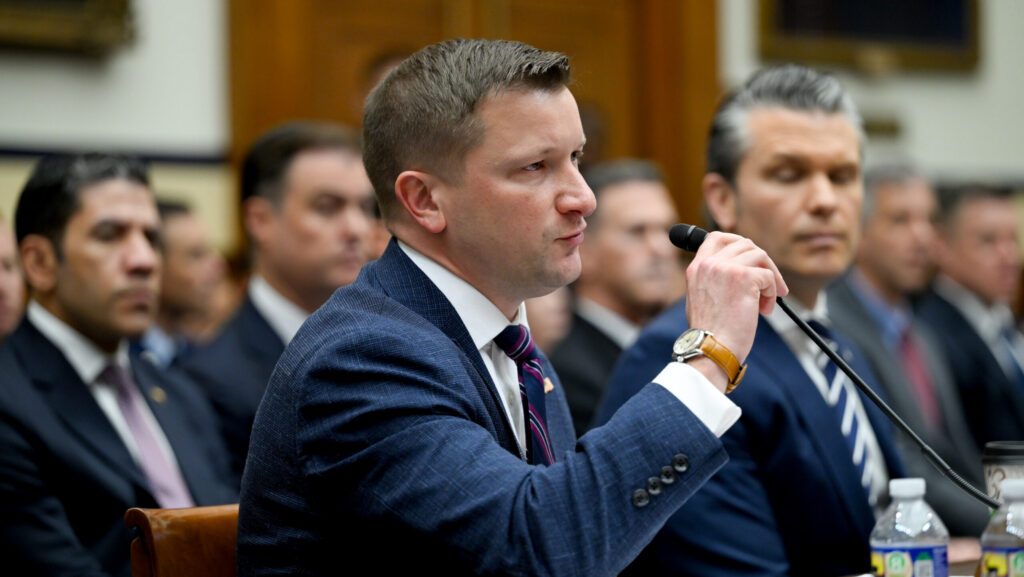
With reconciliation uncertain, Pentagon eyeing plan to retool FY27 priorities with Congress
In exclusive comments to Breaking Defense, the Pentagon’s comptroller acknowledged that some efforts may need to be push...